A leftover green site sits within Shenzhen's dense CBD and lacks a clear public role.
Case study
How can a dense CBD site offer a restorative pause from the city's hard urban flow?
Set urban flow against a cave-like botanical retreat to create a layered sensory journey.
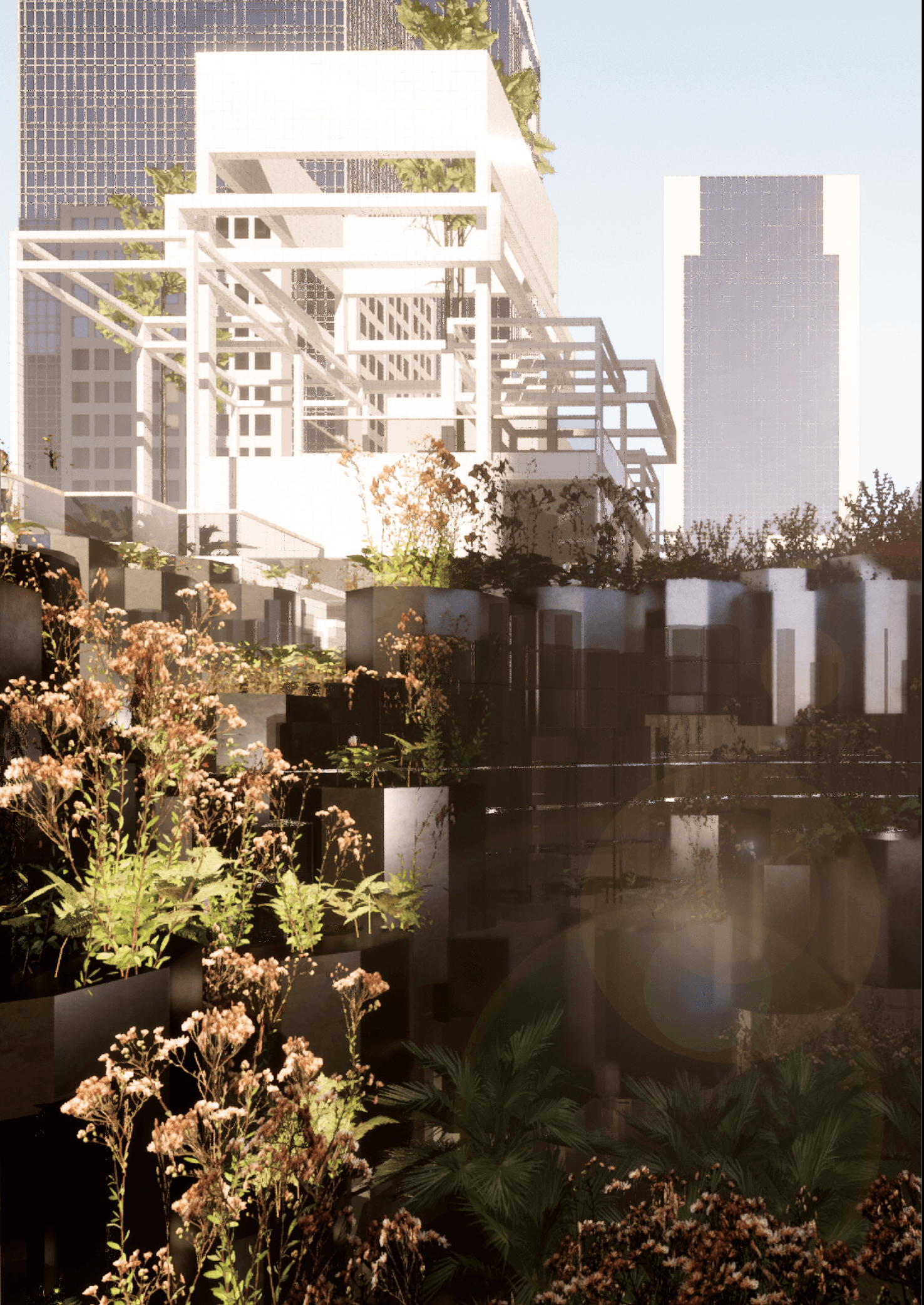
A botanical garden proposal with spatial sections, atmospheric renders, and presentation sheets.
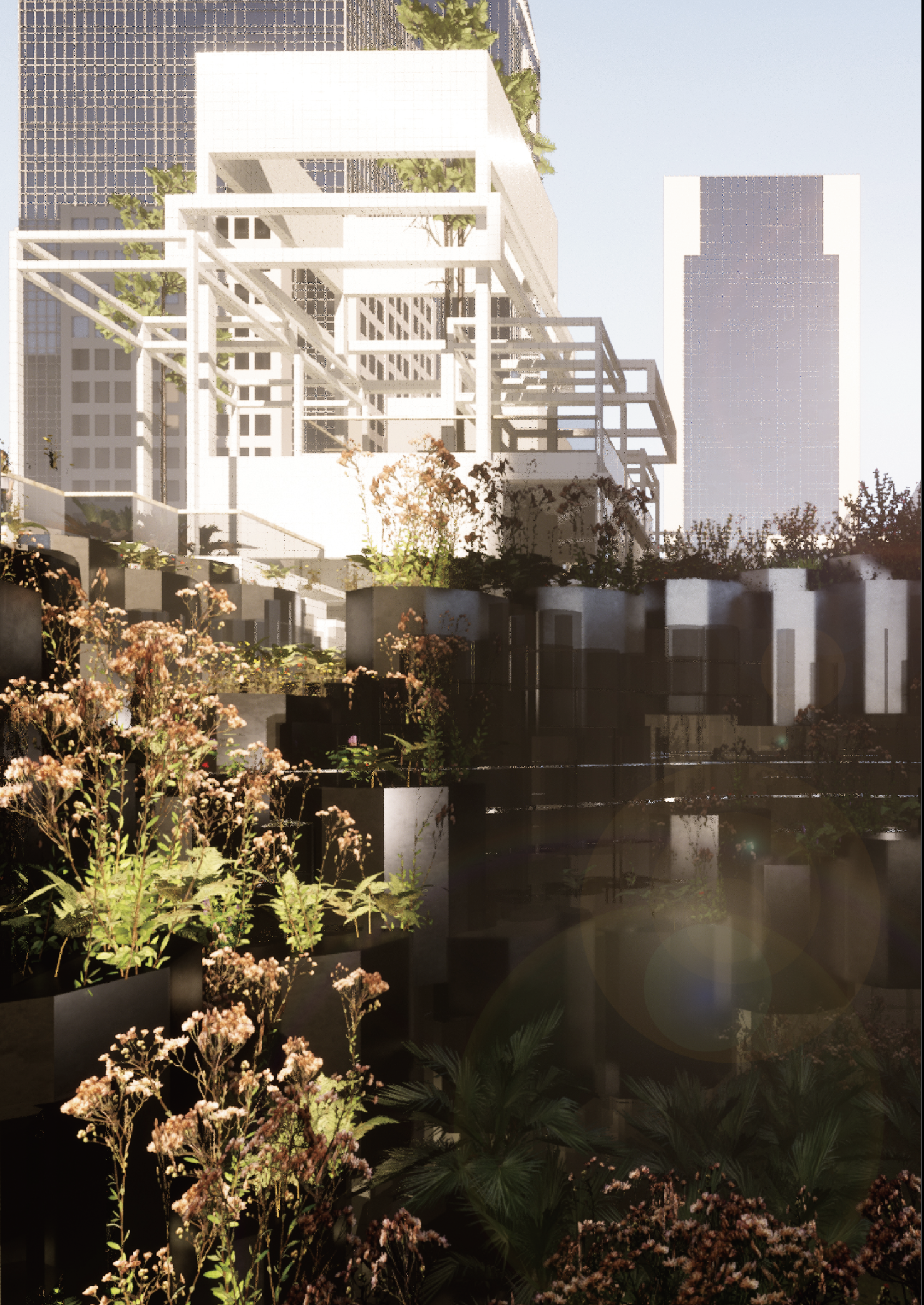
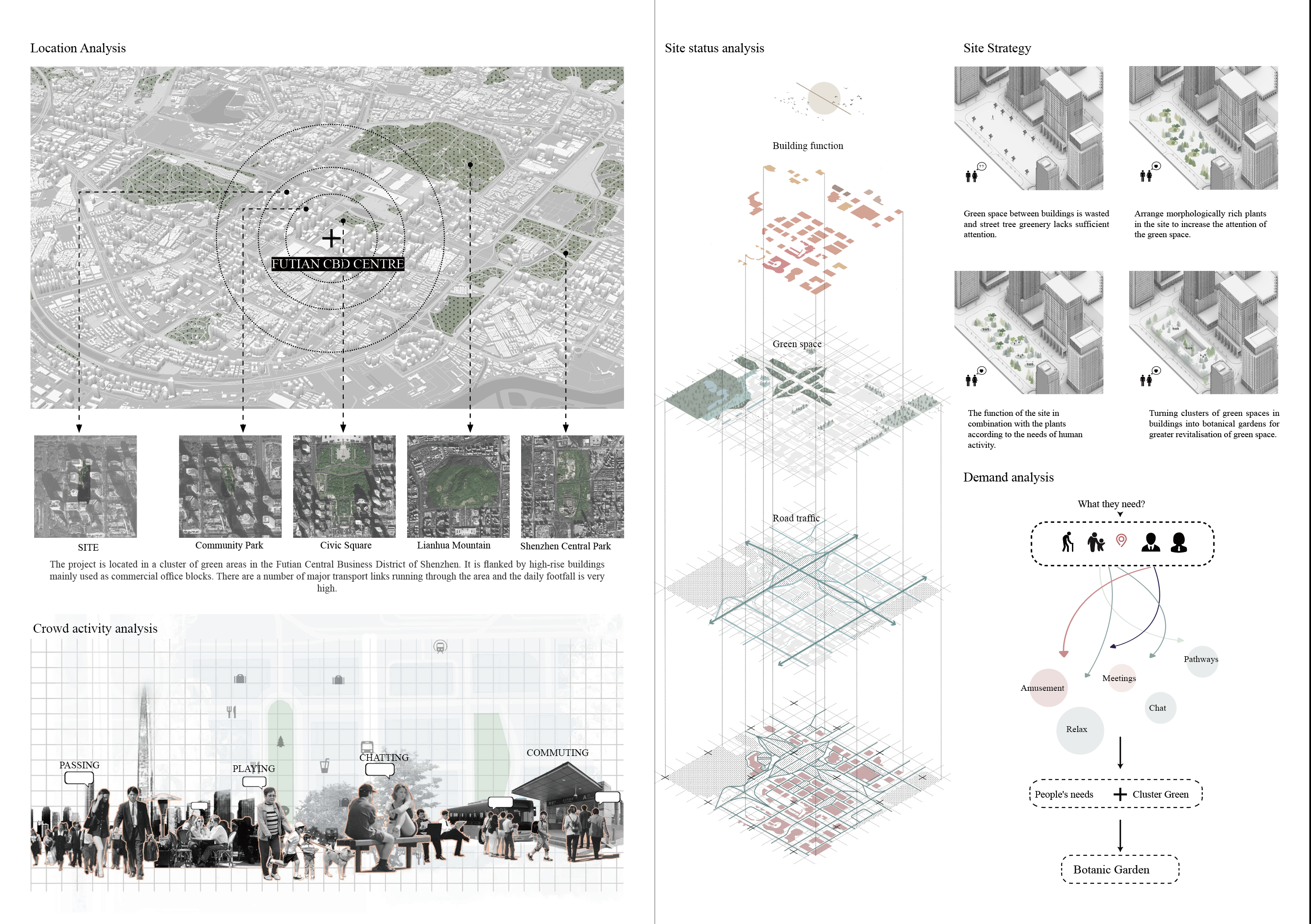
The project site is located within a green space with no defined function, surrounded by the bustling CBD. Shenzhen, characterized by the steel and concrete of its towering skyscrapers, is witnessing a decline in the appeal of its monotonous and limited green areas. In response to this, the project aims to create a relaxing retreat for white-collar workers in the nearby office districts, a botanical garden that offers a pleasant and restorative escape.
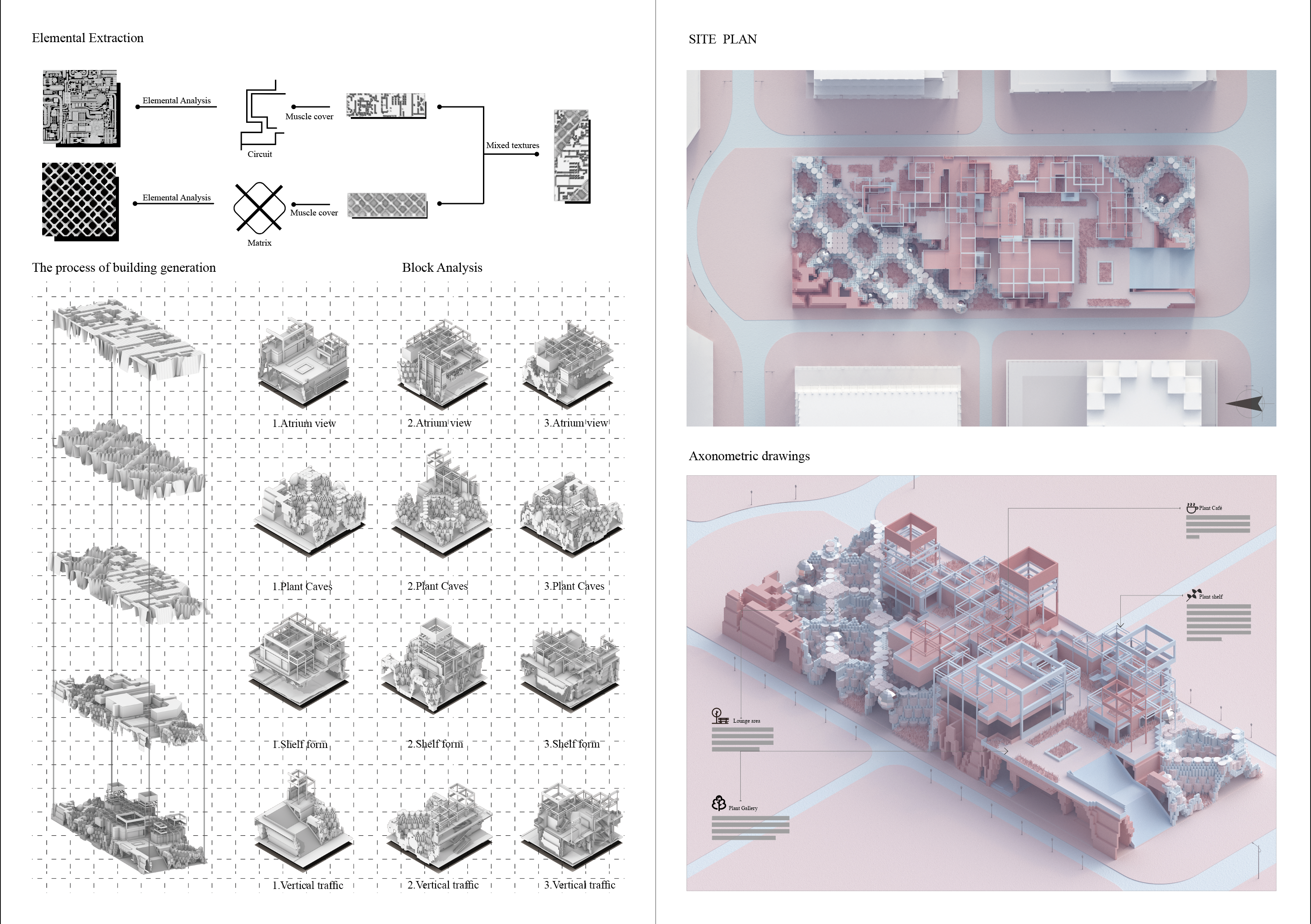
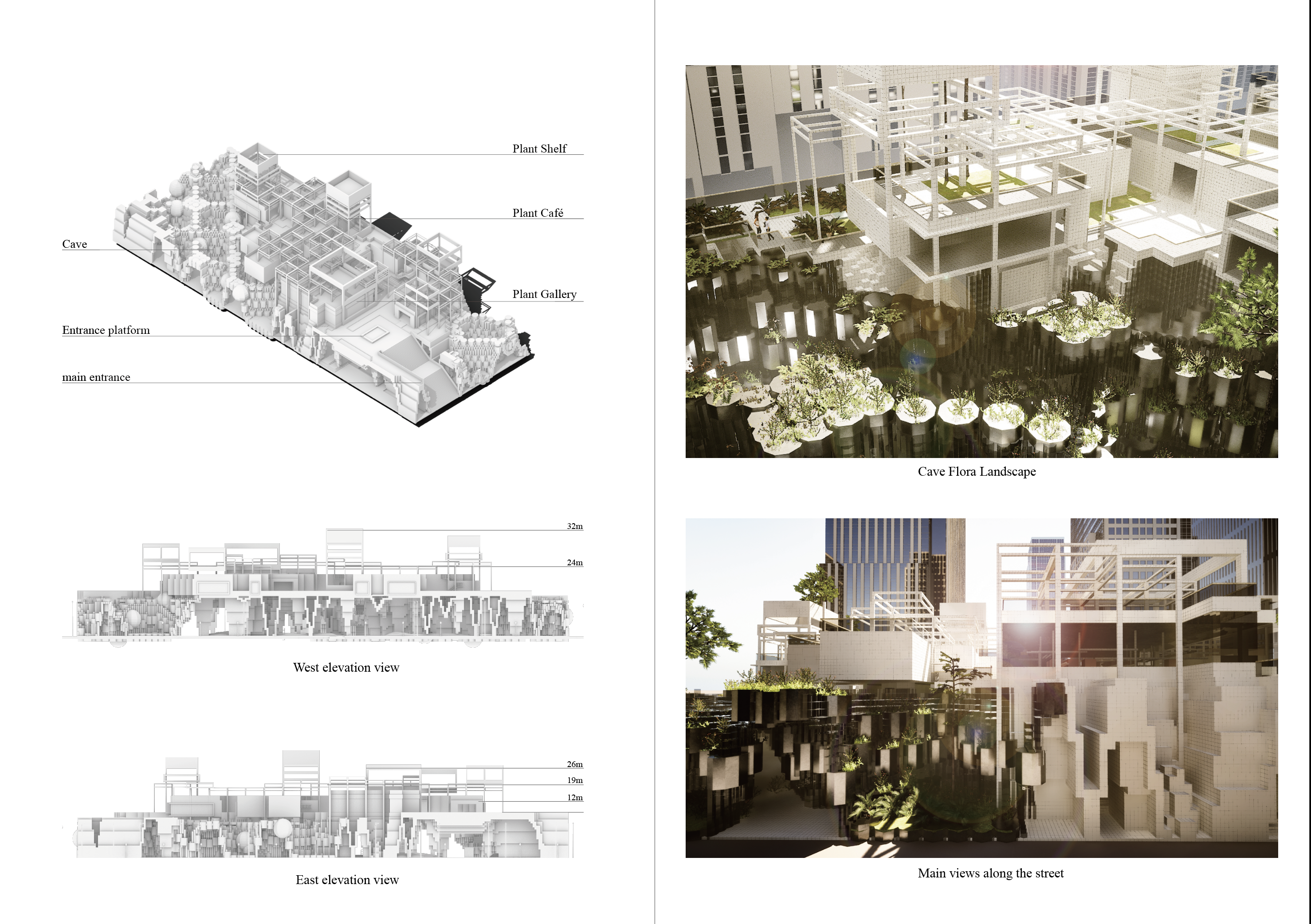
The project's architectural form juxtaposes two contrasting elements: an artificial texture, the "current," and a natural texture, the "cave." The current, represented by a flowing surface, evokes the movement of urban roads and pedestrians, while the cave embodies a natural environment, untouched and tranquil. The combination of these textures invites visitors to navigate between urban structure and untouched nature, offering a layered sensory experience.
The botanical garden is designed to rekindle the desire of city dwellers to reconnect with nature. The interplay of structured formality and organic randomness creates an intimate and relaxing environment where individuals can find solace and unwind after a long day at work.