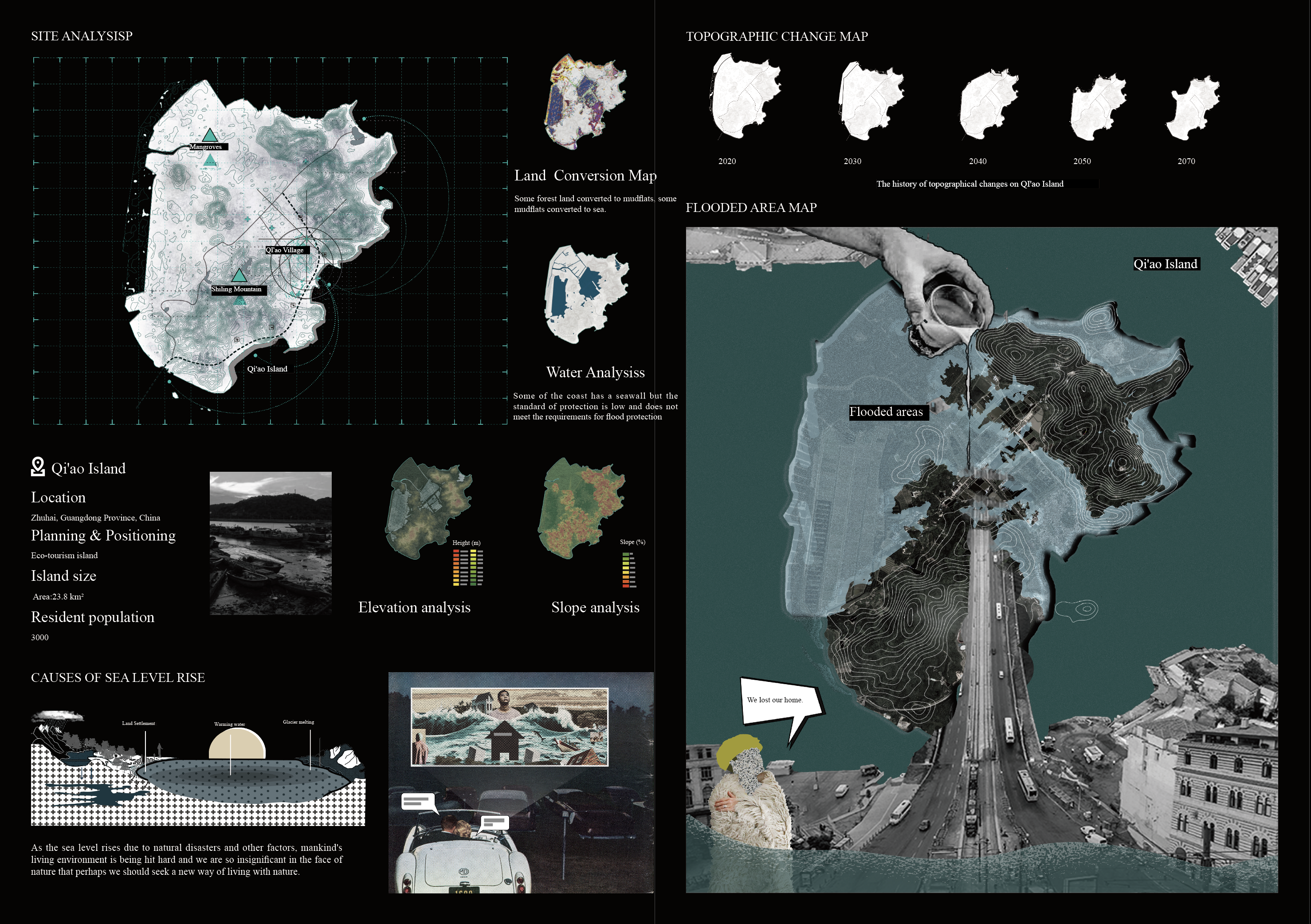
Qi'ao Island faces future pressure from sea-level rise and changing fishing-community livelihoods.
Case study
How can a small island adapt to sea-level rise while sustaining settlement and local life?
Create floating topography, aerial mobility, and productive programs that support self-sufficiency.
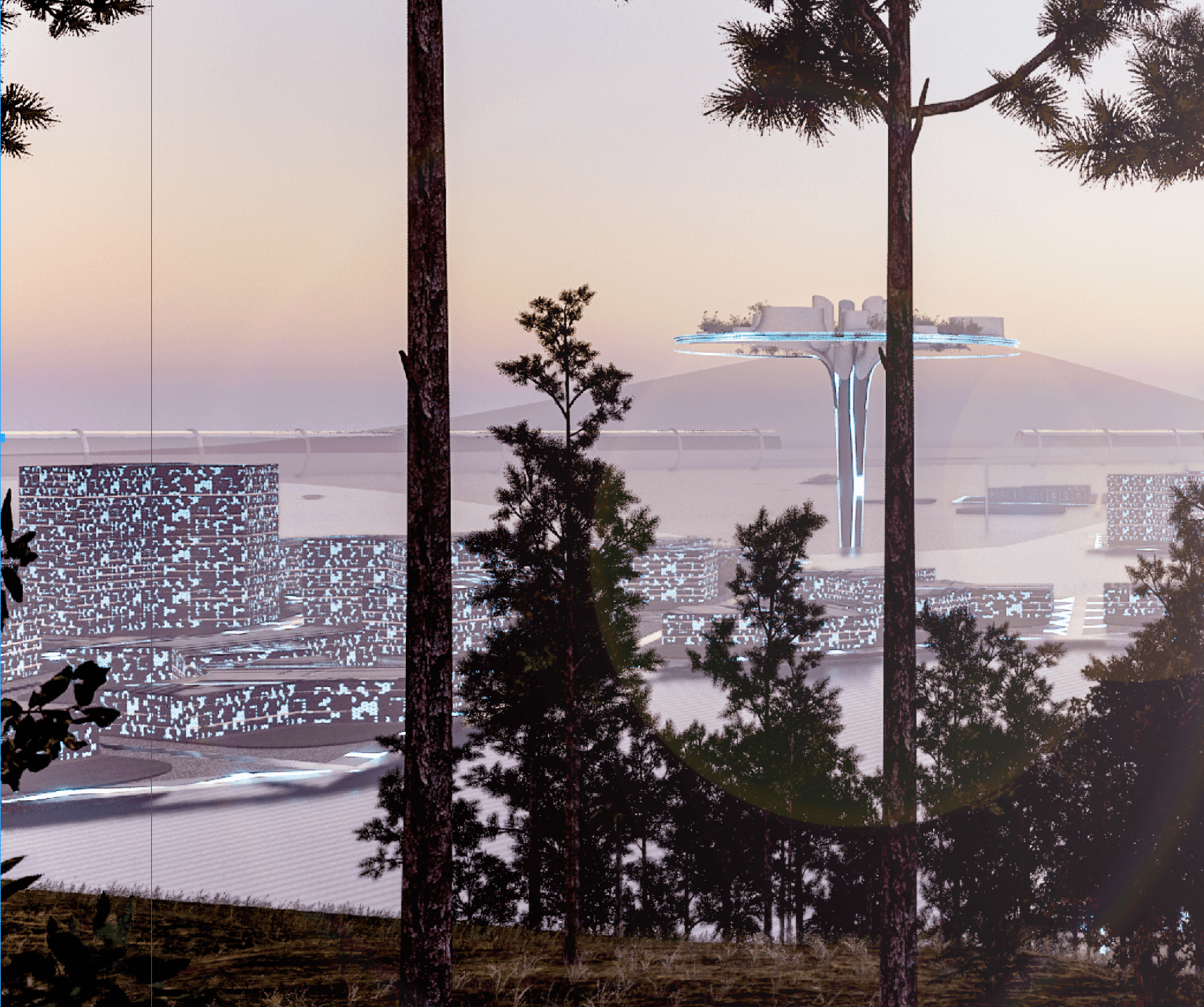
A future-island proposal combining transport, tourism, productive landscapes, and resilient settlement.
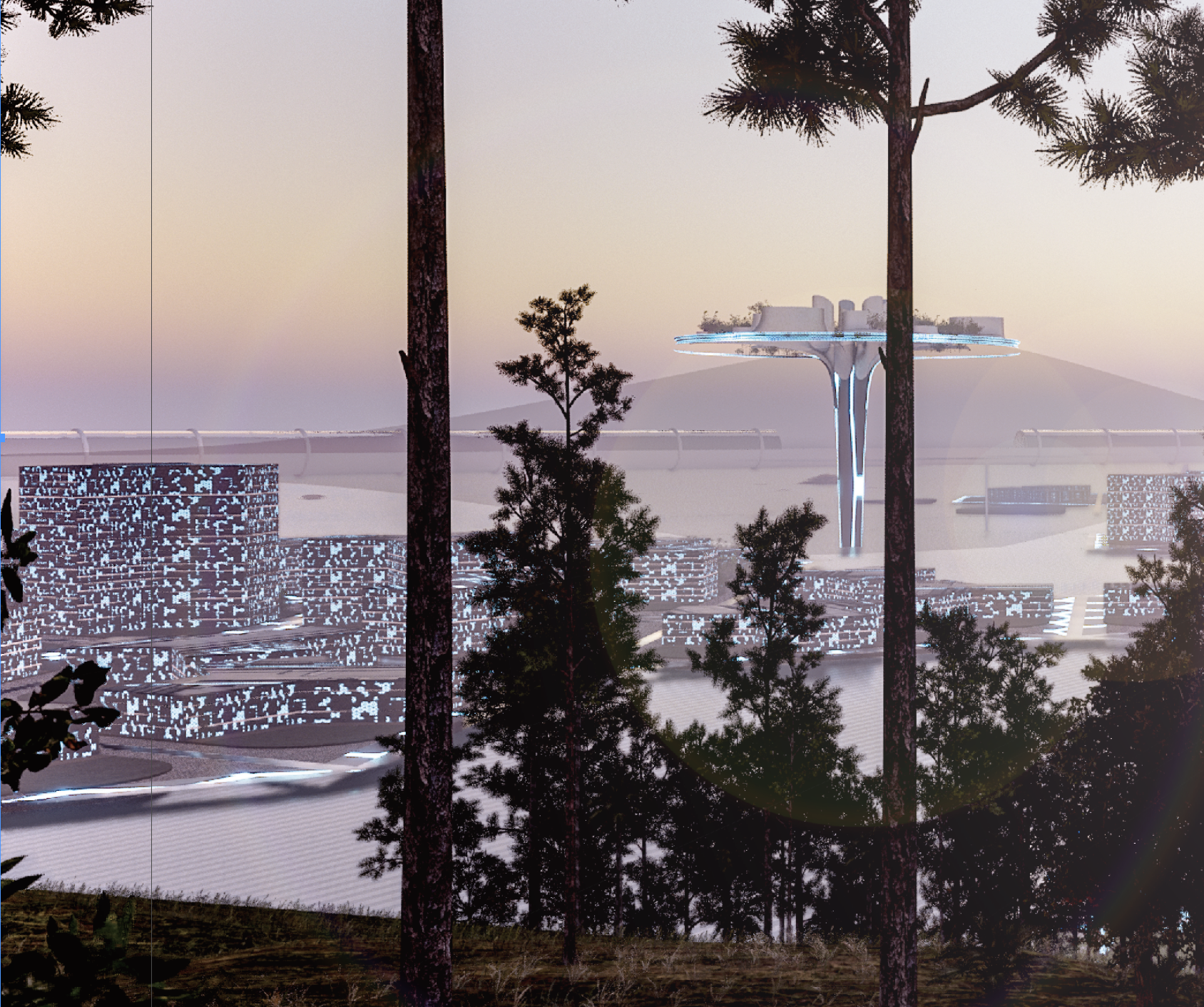
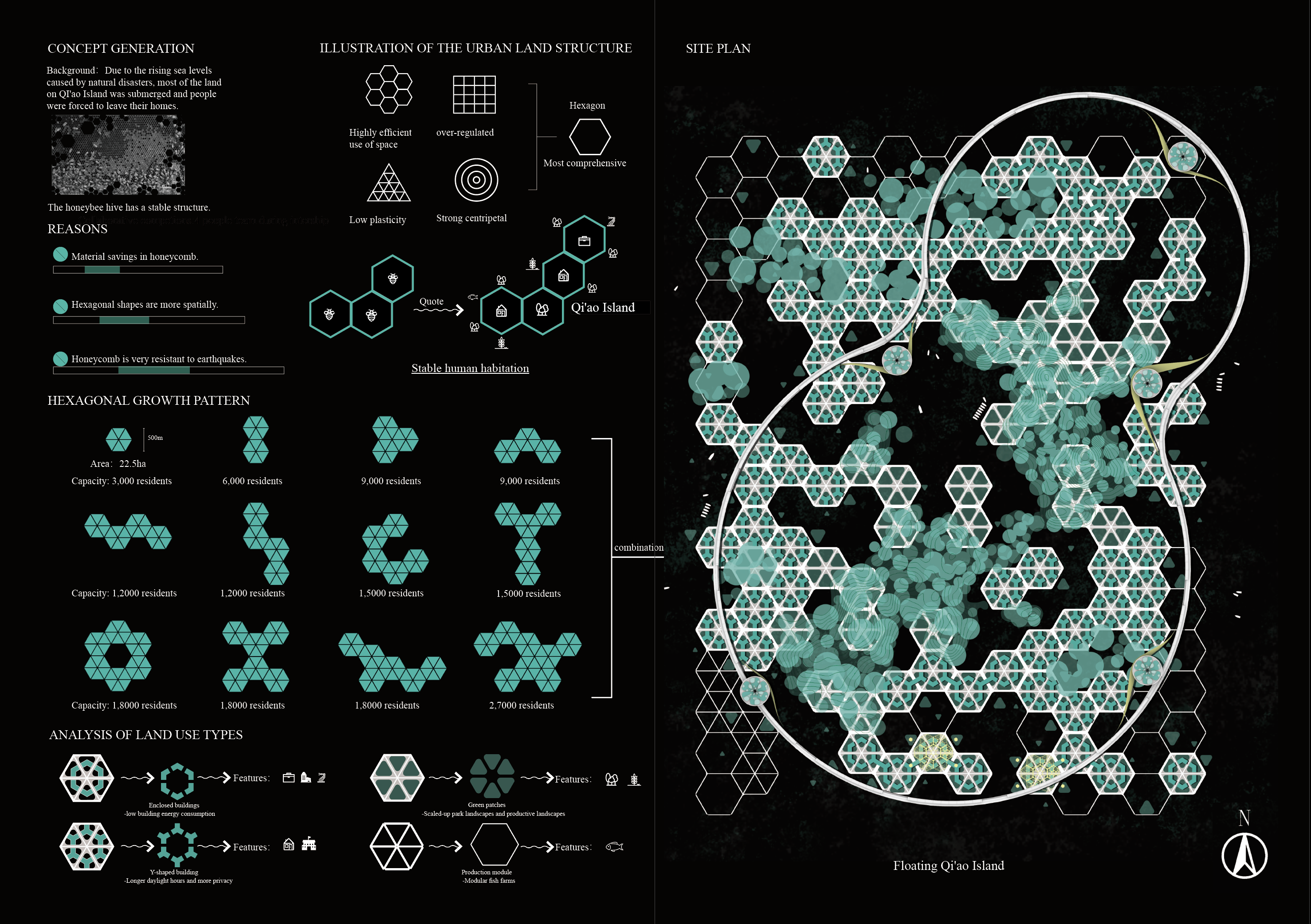
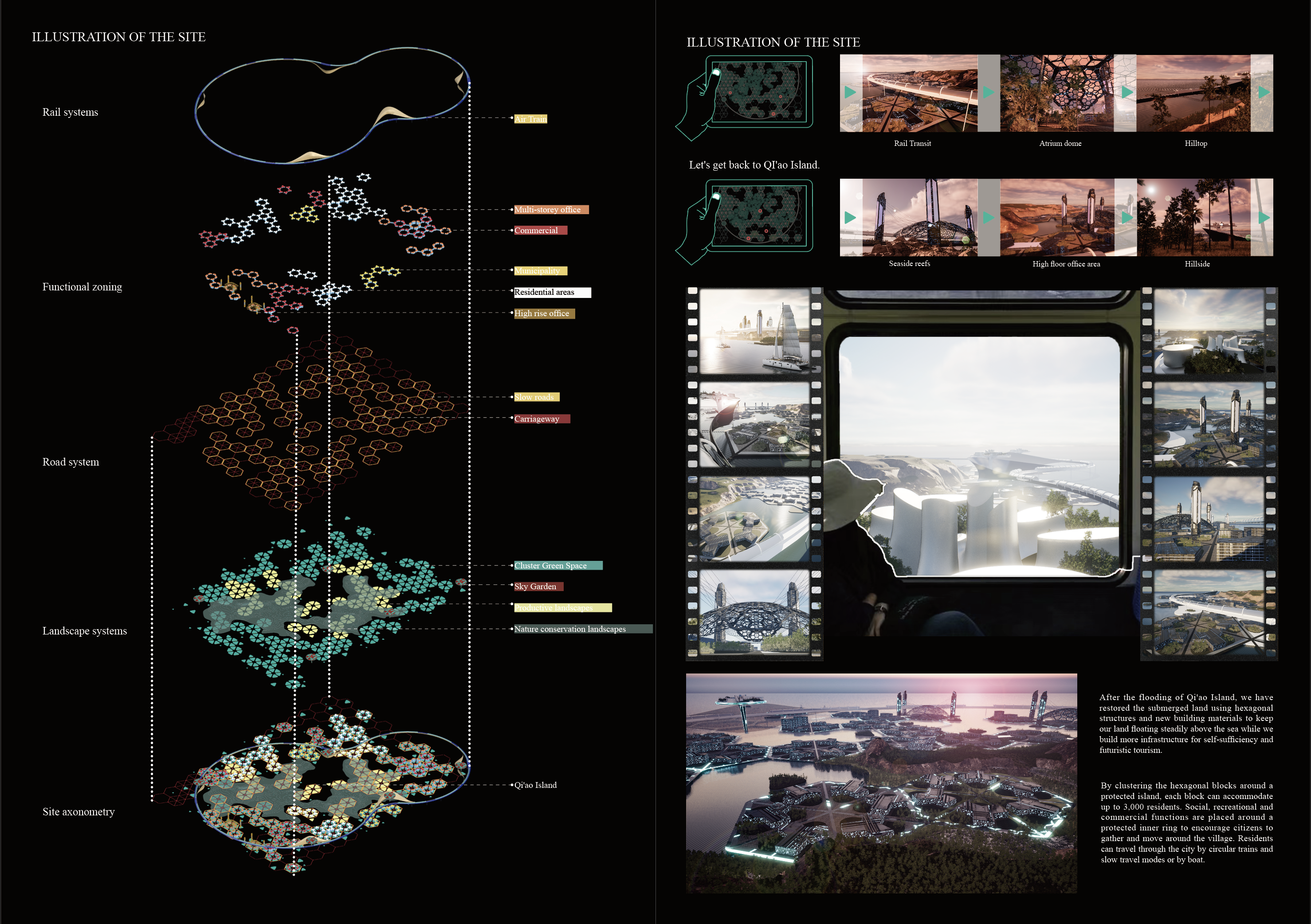
This project addresses the challenges of survival and development for small fishing islands, particularly in light of future sea level rise. The vision is to restore the island's topography and infrastructure through innovative artificial interventions. One key approach involves creating a free-floating island topography that can adapt to rising sea levels, even submerging partially under seawater as needed. Additionally, the project includes the construction of an aerial transportation track, allowing for complete accessibility across the island within 15 minutes. By implementing functional resettlement strategies, such as the establishment of sustainable fishing grounds, the project aims to provide a resilient solution for the island's inhabitants while fostering self-sufficiency and a forward-looking model for tourism.