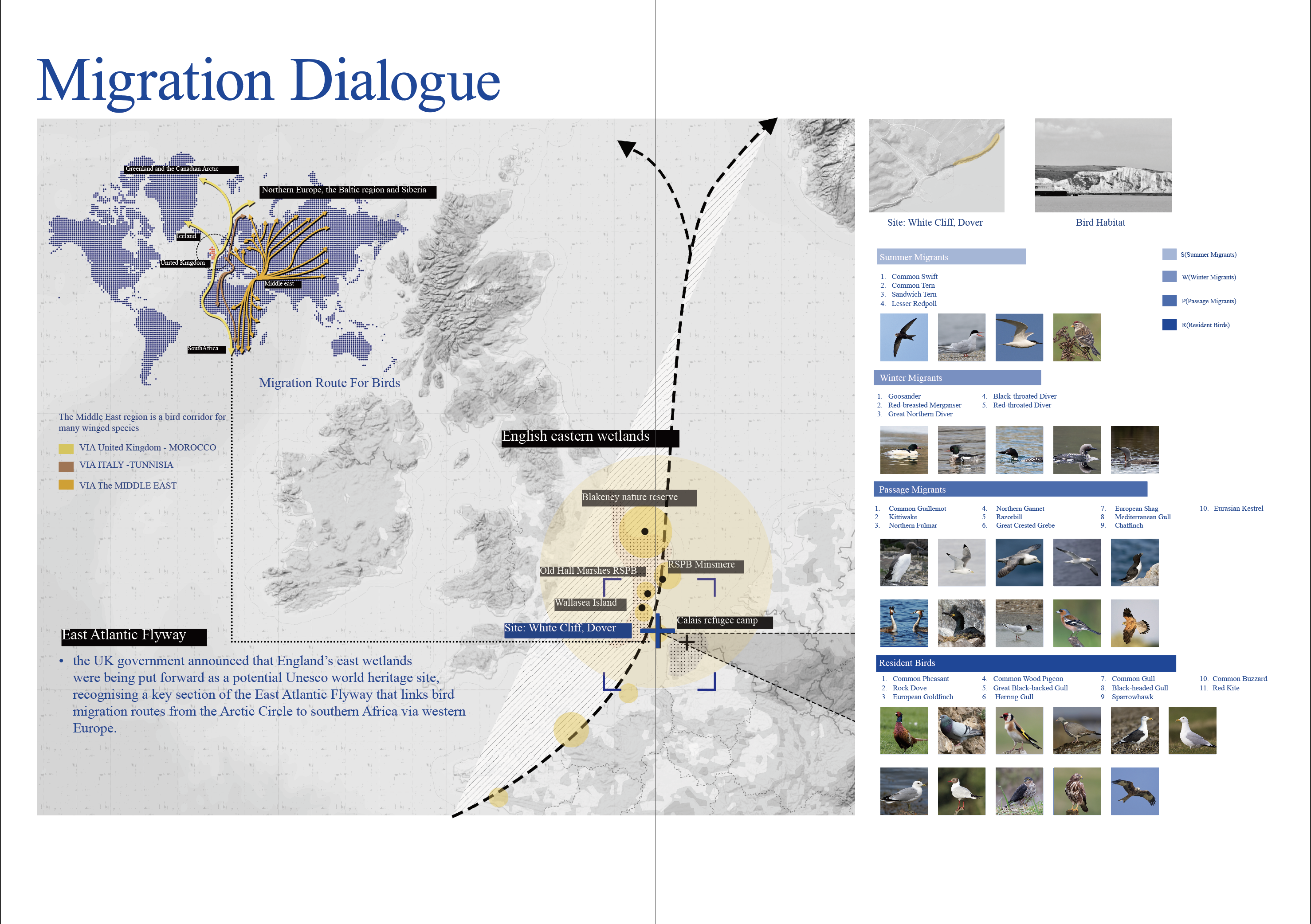
The White Cliffs of Dover carry layered histories of migration, memory, and ecological movement.
Case study
How can a monument become both a place of memory and a living ecological habitat?
Use bird migration to organise habitats, viewing points, and participatory rituals.
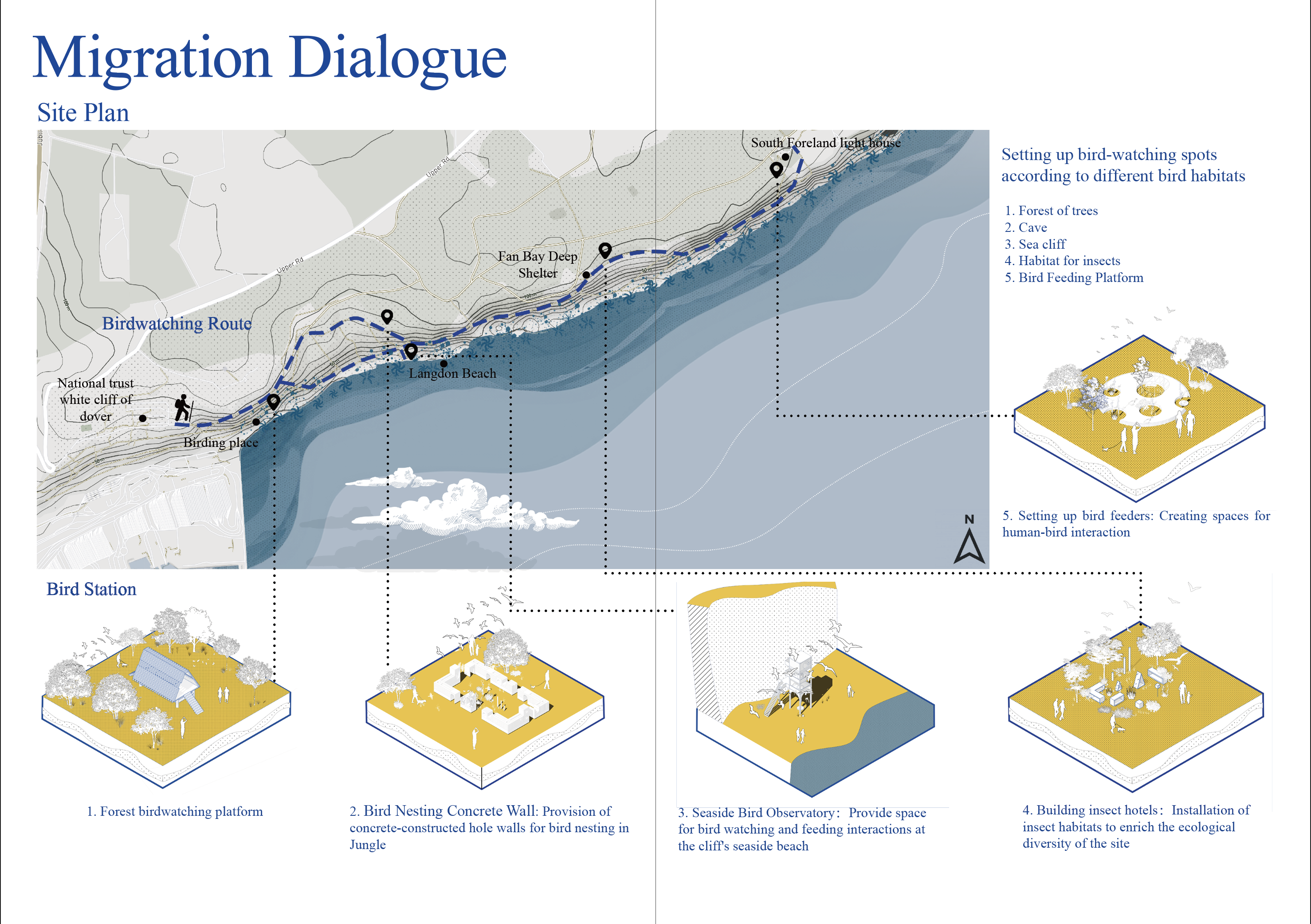
A monument landscape with five bird-focused stations and a visitor journey narrative.
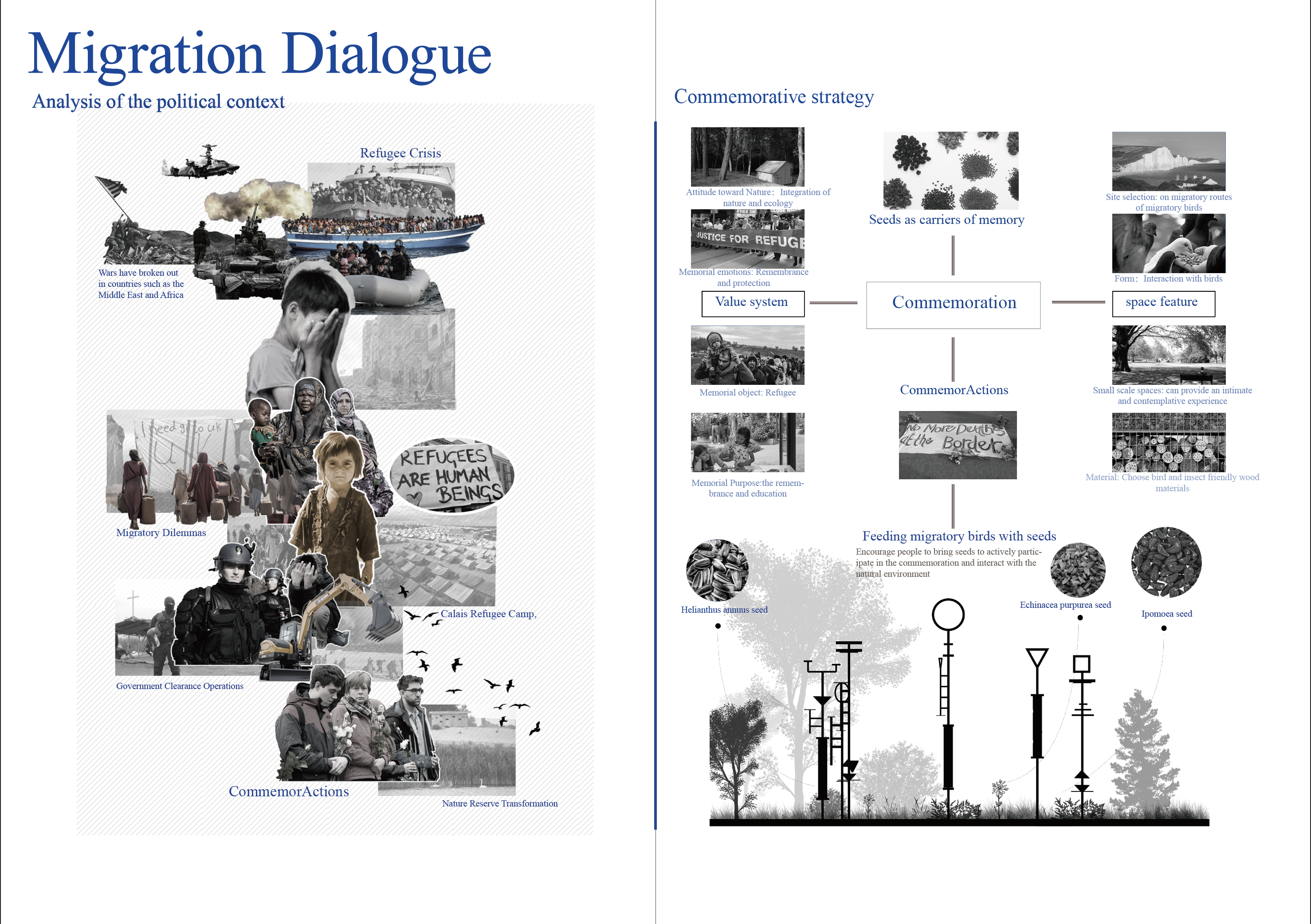
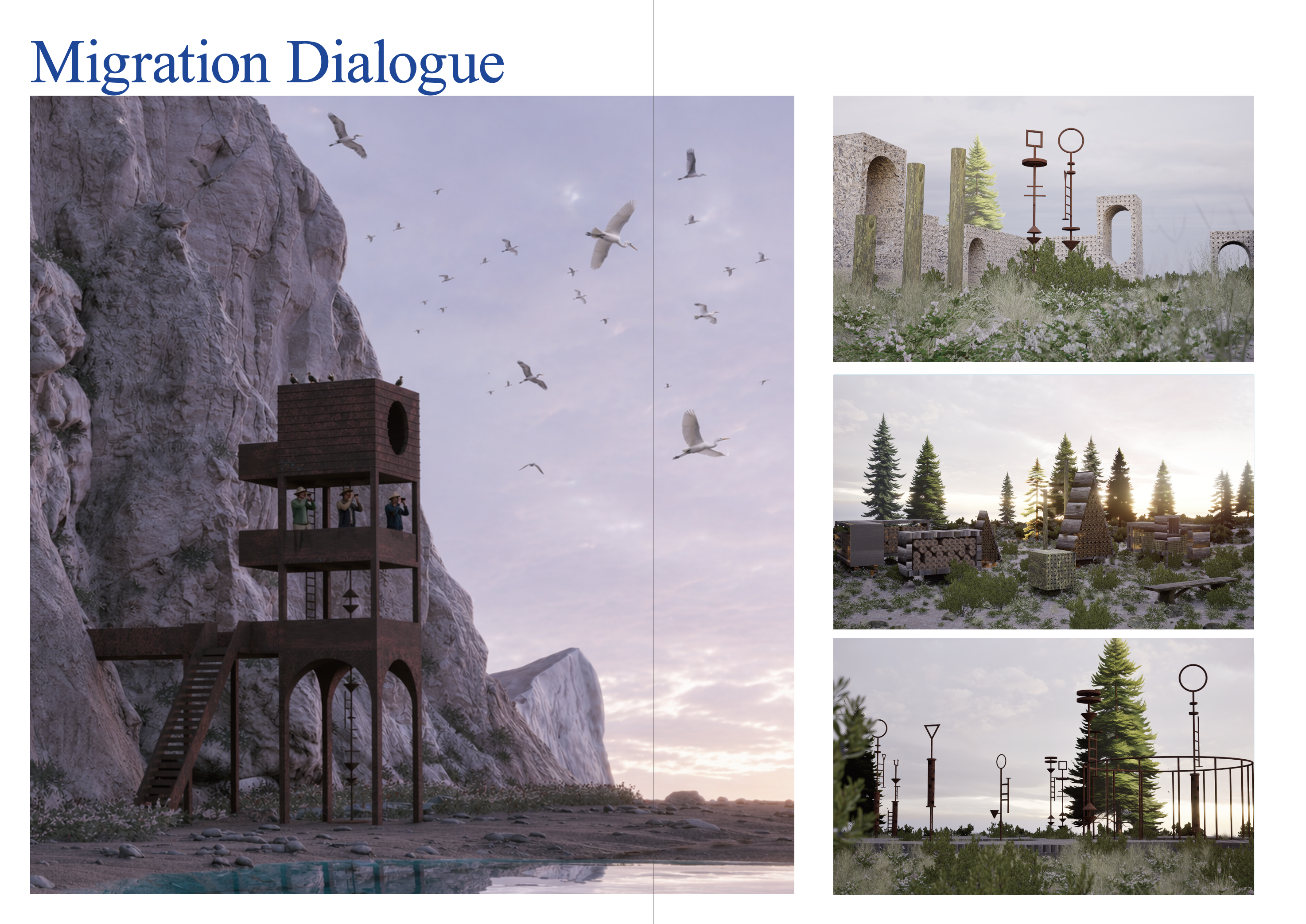
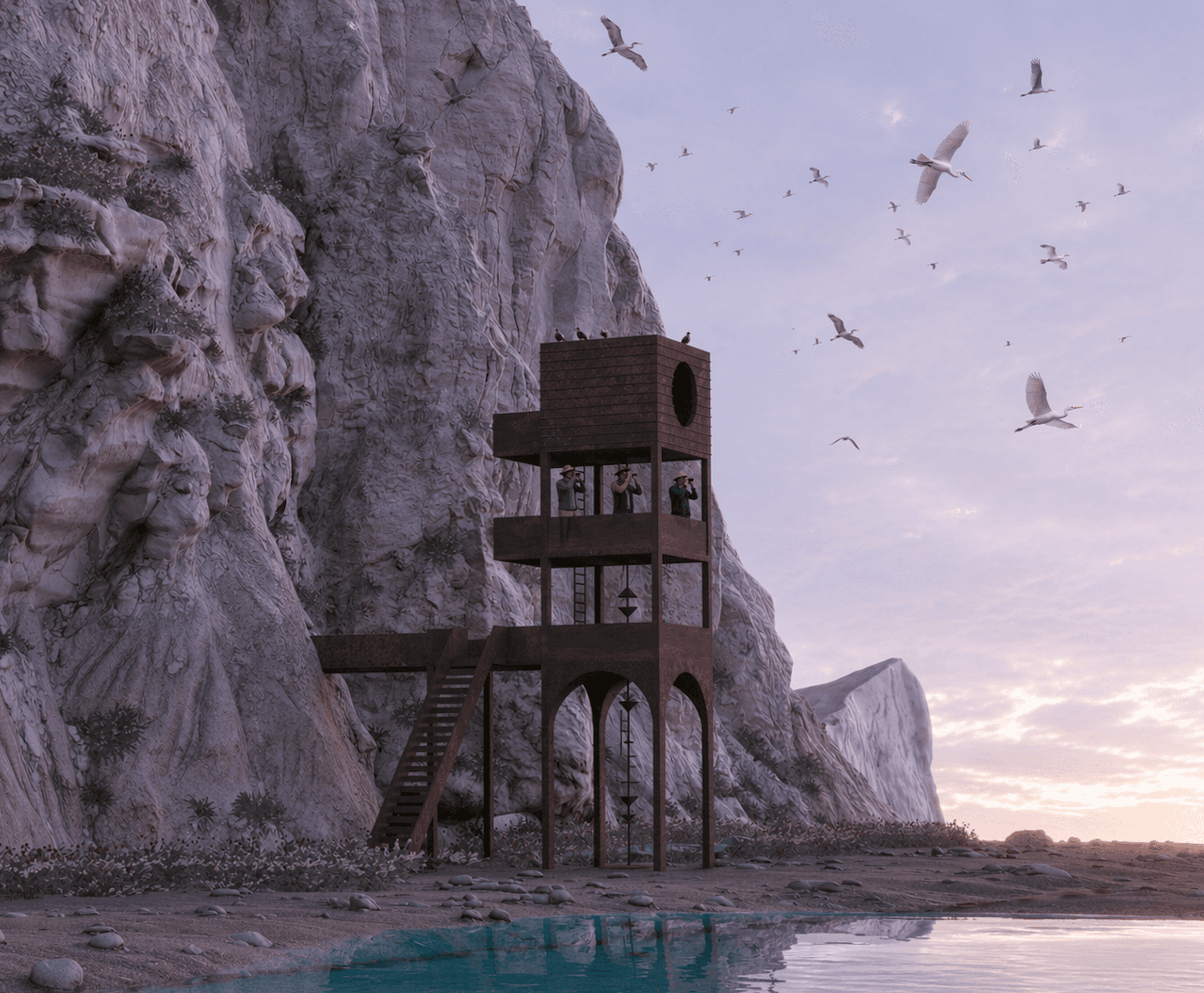
My design concept envisions a commemorative path along the White Cliffs of Dover, resonating with bird migration, weaving together human, avian, and botanical elements. Visitors are encouraged to bring bird-friendly seeds to feeders, attracting avian visitors to feed and nest. Over time, this area will evolve into a collective artwork shared by birds and humans.
The design features five bird-centric stations: a birdwatching platform, an avian observatory, an insect habitat, concrete wall nesting sites, and interactive feeding stations, all encouraging commemorative activities and natural conversations with birds.
Constructed with weather-resistant steel, wood, concrete, and other natural materials, these habitats not only enhance biodiversity but also protect the ecosystem. Seeds, symbolizing the origins and memory of plants, invite participation with sunflower, morning glory, and echinacea seeds in memorial activities. The goal is to create a multifunctional space that works both as a monument and as a model for ecological conservation, gradually transforming the land into a shared green heritage.